Pluppy A mental health app
OVERVIEW

A mental health app created to support emotional well-being through self-guided tools. The app aims to help users manage stress, anxiety, and depression more effectively with personalized methods that truly meet their needs.

Date

JAN 1, 2024 — JUL 30, 2024

ROLE

UX/UI DESIGNER

SERVICES

DIGITAL PLATFORM

About the project

This individual project began with a growing concern about mental health in Thailand, where emotional issues like depression and anxiety have been steadily rising. While many existing apps offer mood tracking or advice, they often lack depth and personalization. Pluppy was developed to fill this gap, using feedback from users and concept testing to create an experience that is both meaningful and engaging.

Persona

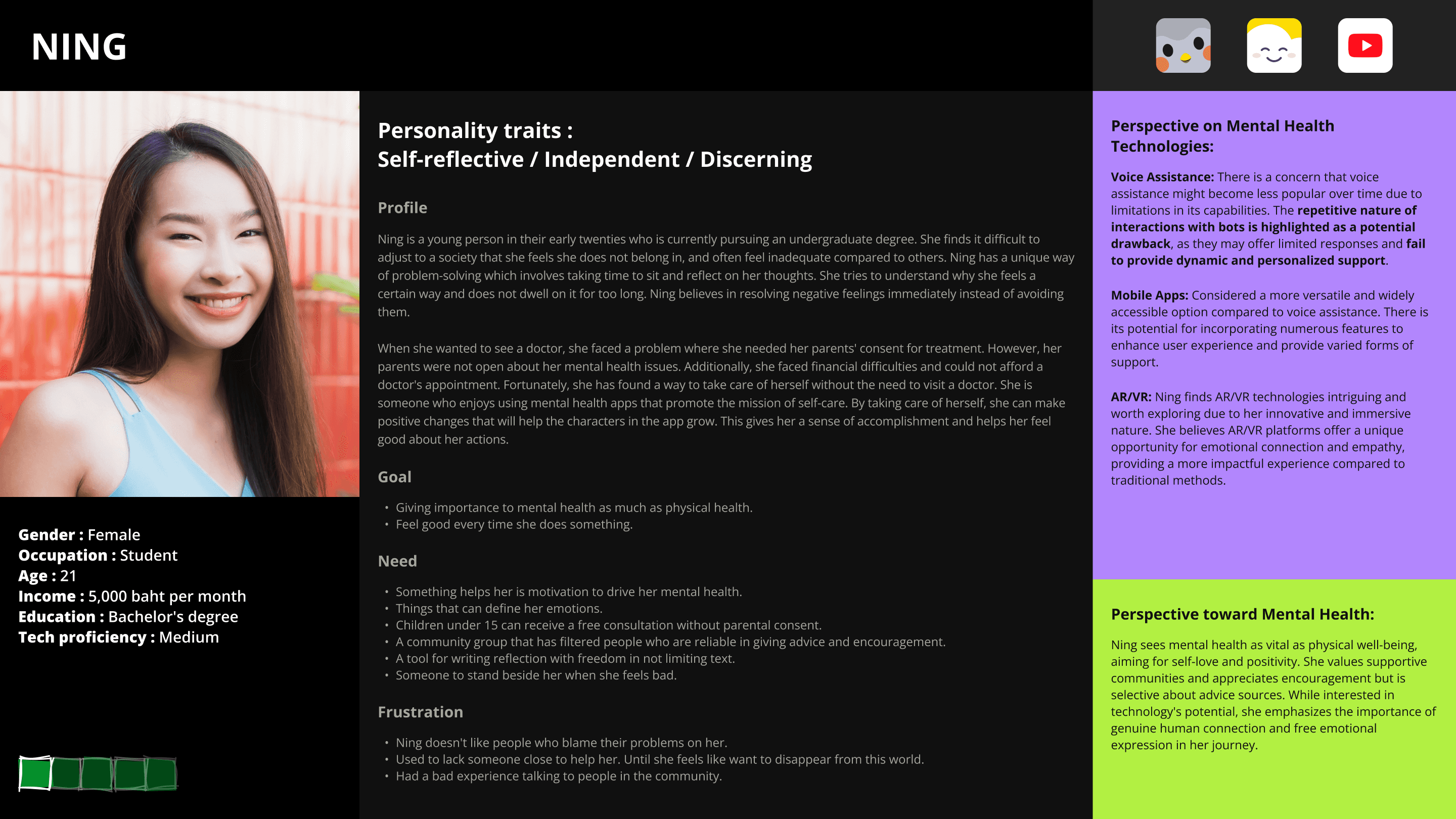
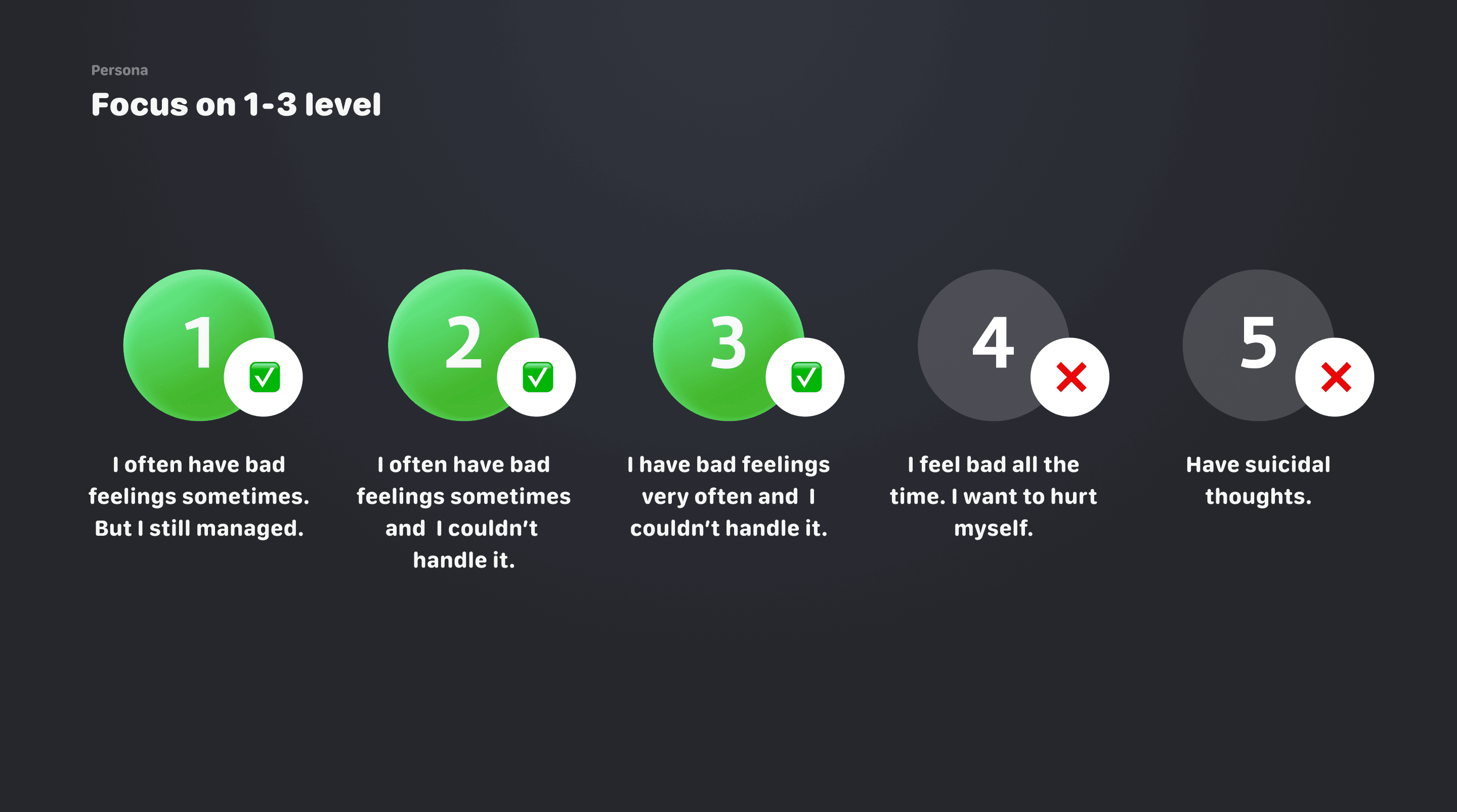
I focused on users with emotional struggles at levels 1–3, those who feel overwhelmed but don’t yet need clinical care. Through in-depth interviews, I shaped three key personas. Their differences helped me design with empathy, flexibility, and real user needs in mind.

Competitor Analysis

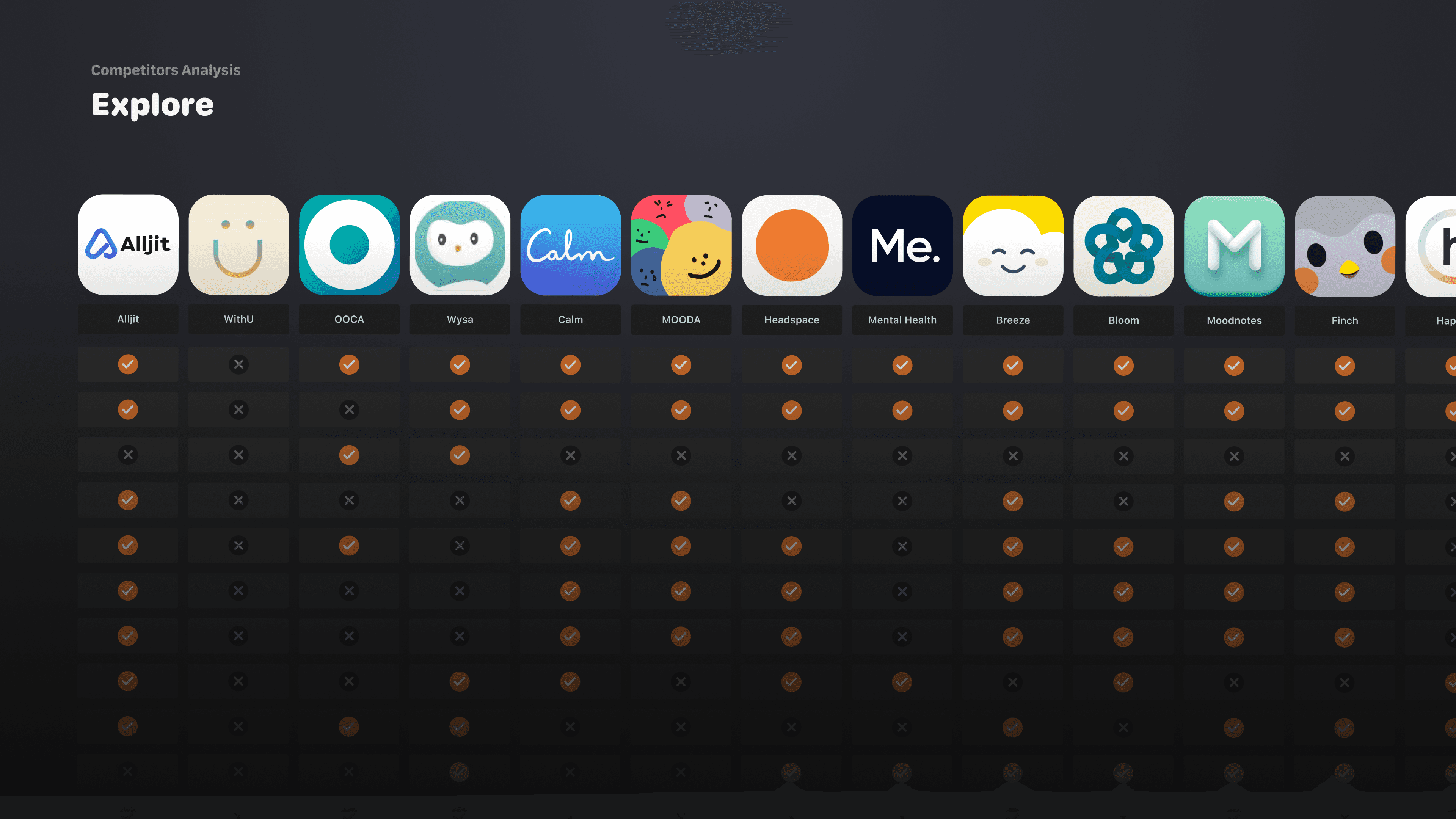
From studying existing mental health apps, I found that most offer mood tracking, podcasts, and supportive communities. However, many limit how often users can log emotions, lock key features behind subscriptions, or provide unhelpful advice in community spaces.

This led me to focus on creating a solution that helps users understand what truly works for them, and feel confident managing their emotions in a way that fits their personal needs.

Insight to Ideation

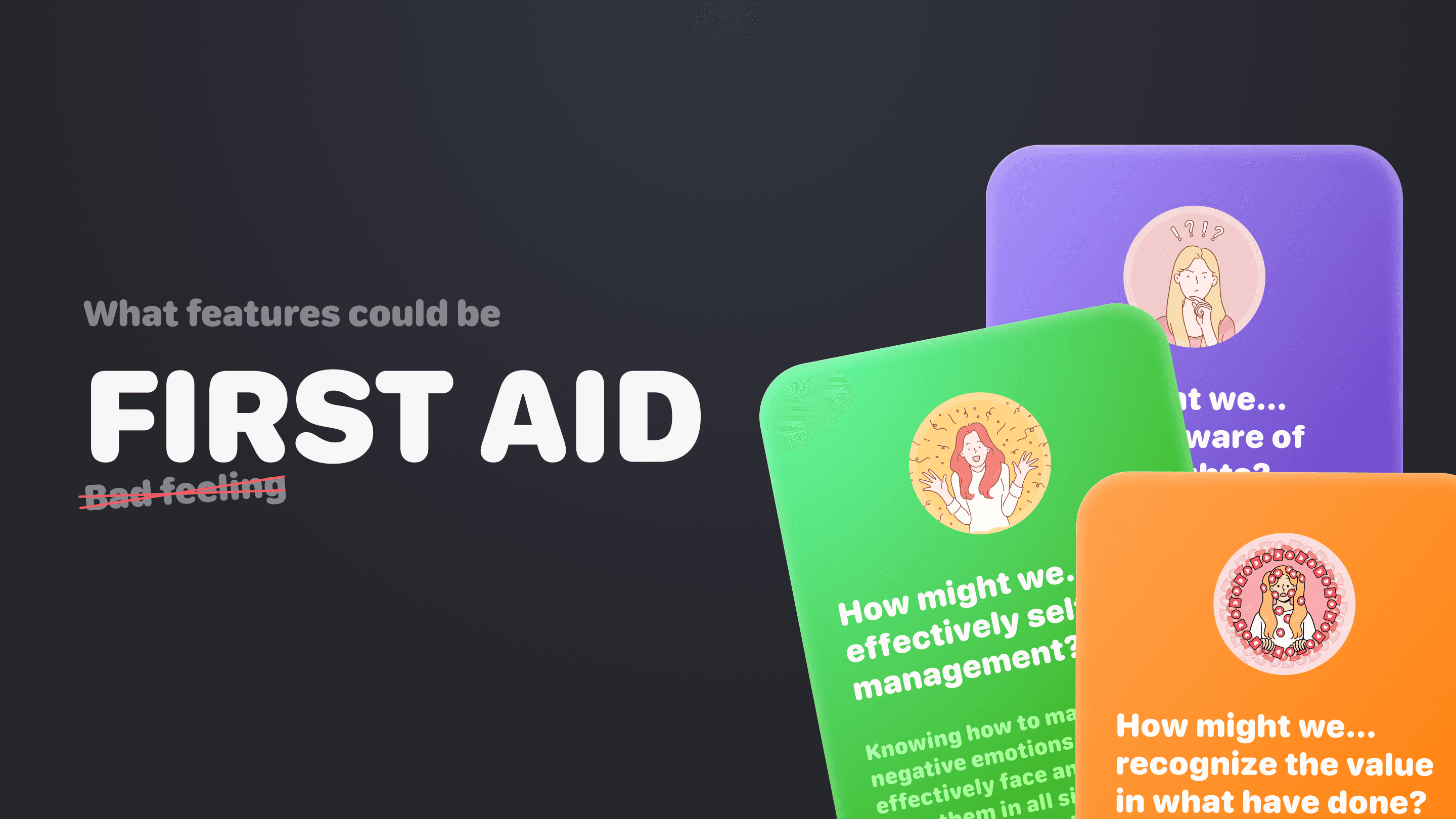
After defining the personas and their journeys, I grouped key pain points and goals into top findings. These led to focused How might we questions, which were sorted into five themes.

Each theme was labeled as either a Design Principle or Opportunity Area. Due to a limited timeline, I focused only on the Design Principles to guide some features that help users understand and manage emotions on their own.

Concept & Key Features

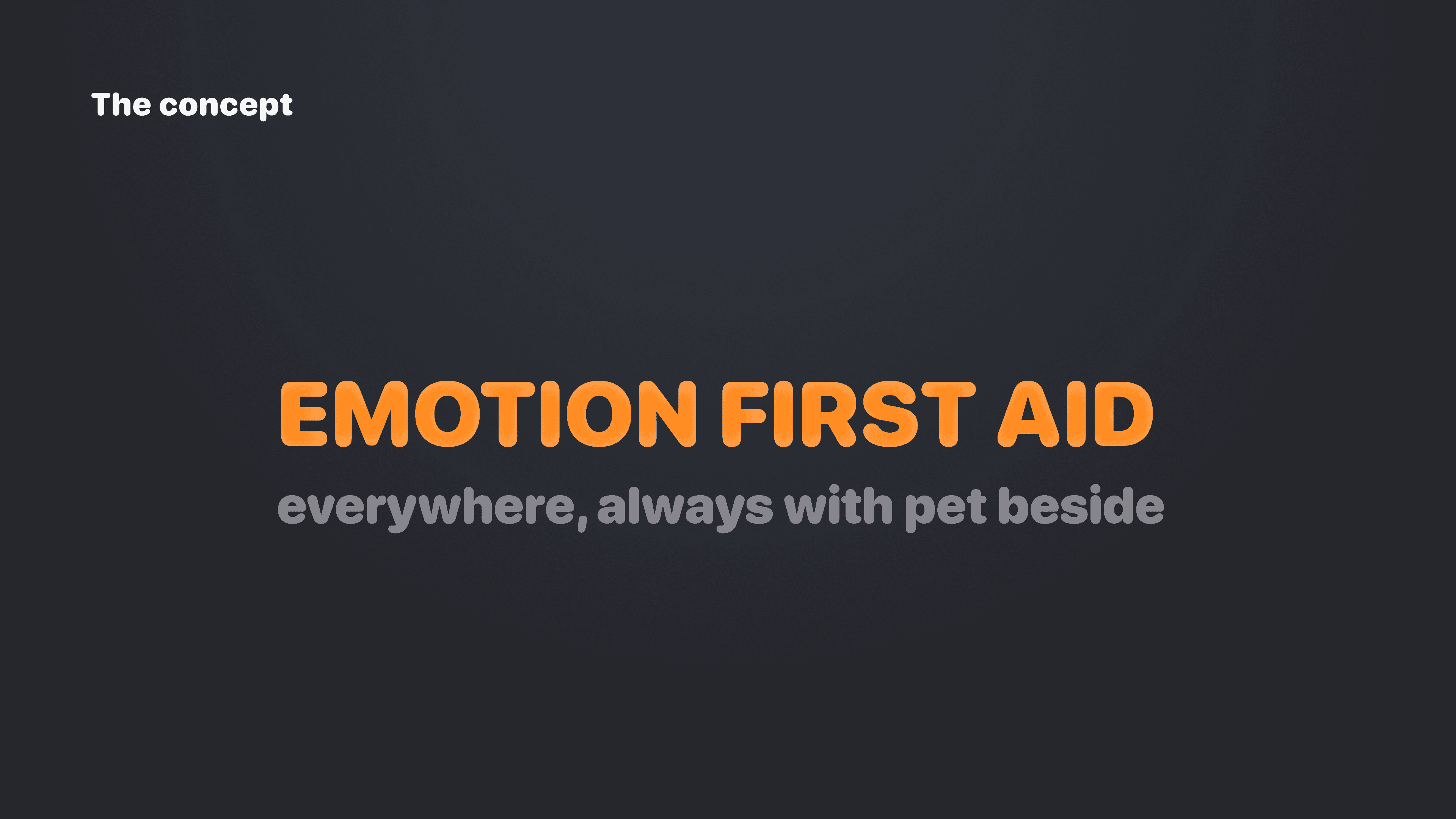
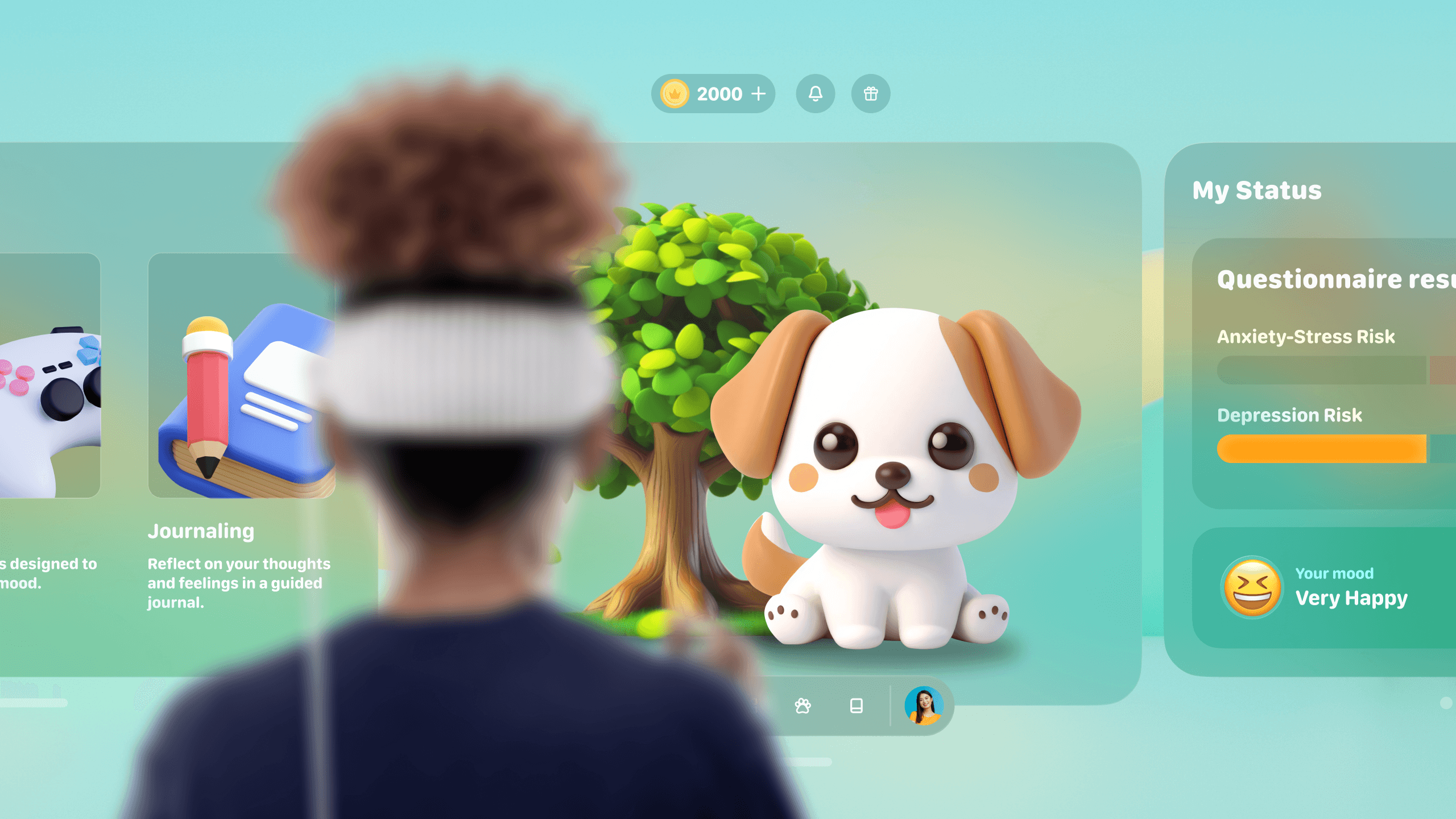
Based on the concept Emotion First Aid: everywhere, always with pet beside, I focused on creating a mental health tool that supports users in managing their emotions anytime, anywhere with a comforting virtual pet by their side. This idea centers on providing quick emotional support in daily life, allowing users to care for their mental well-being instantly wherever they are.

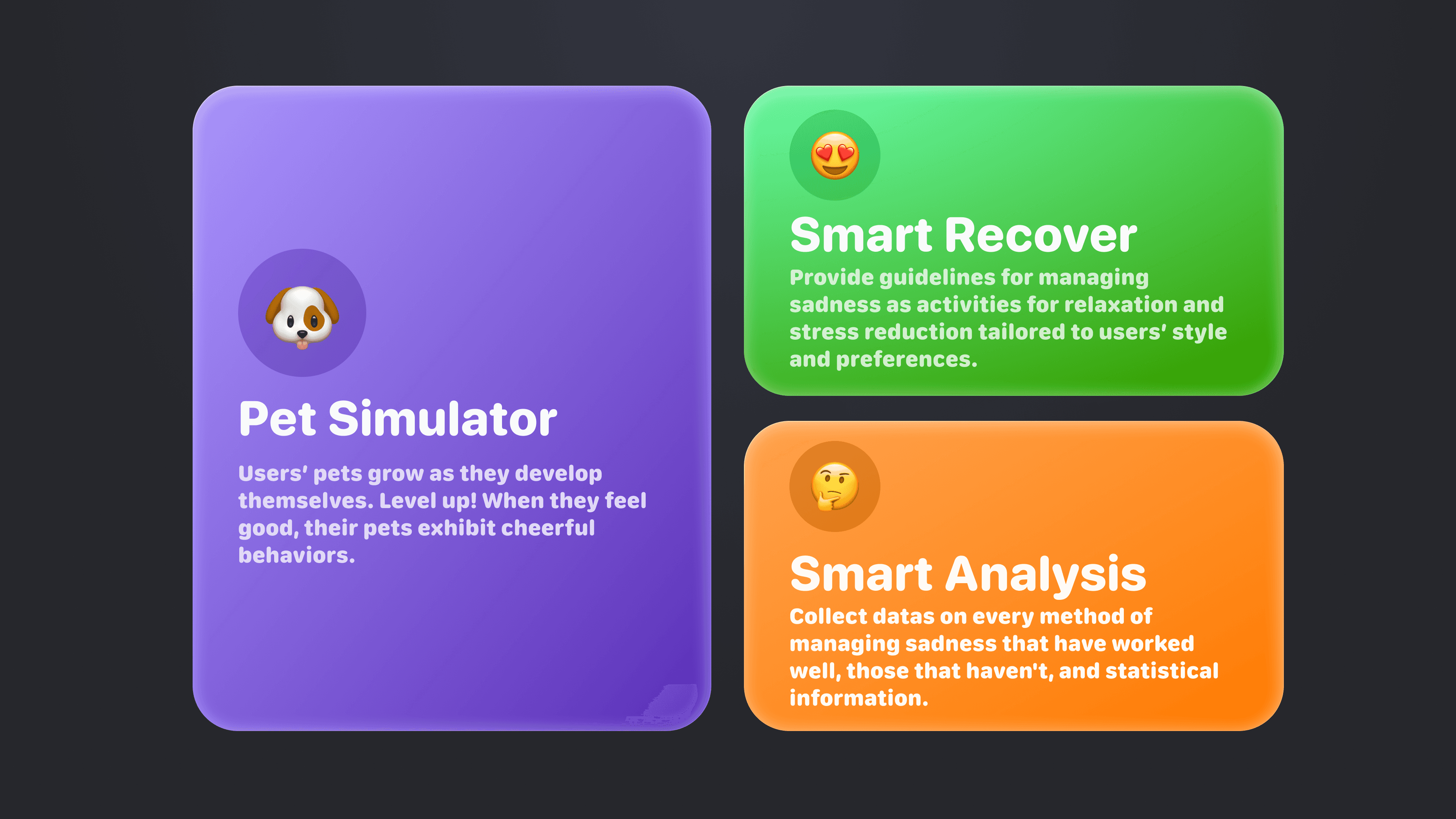
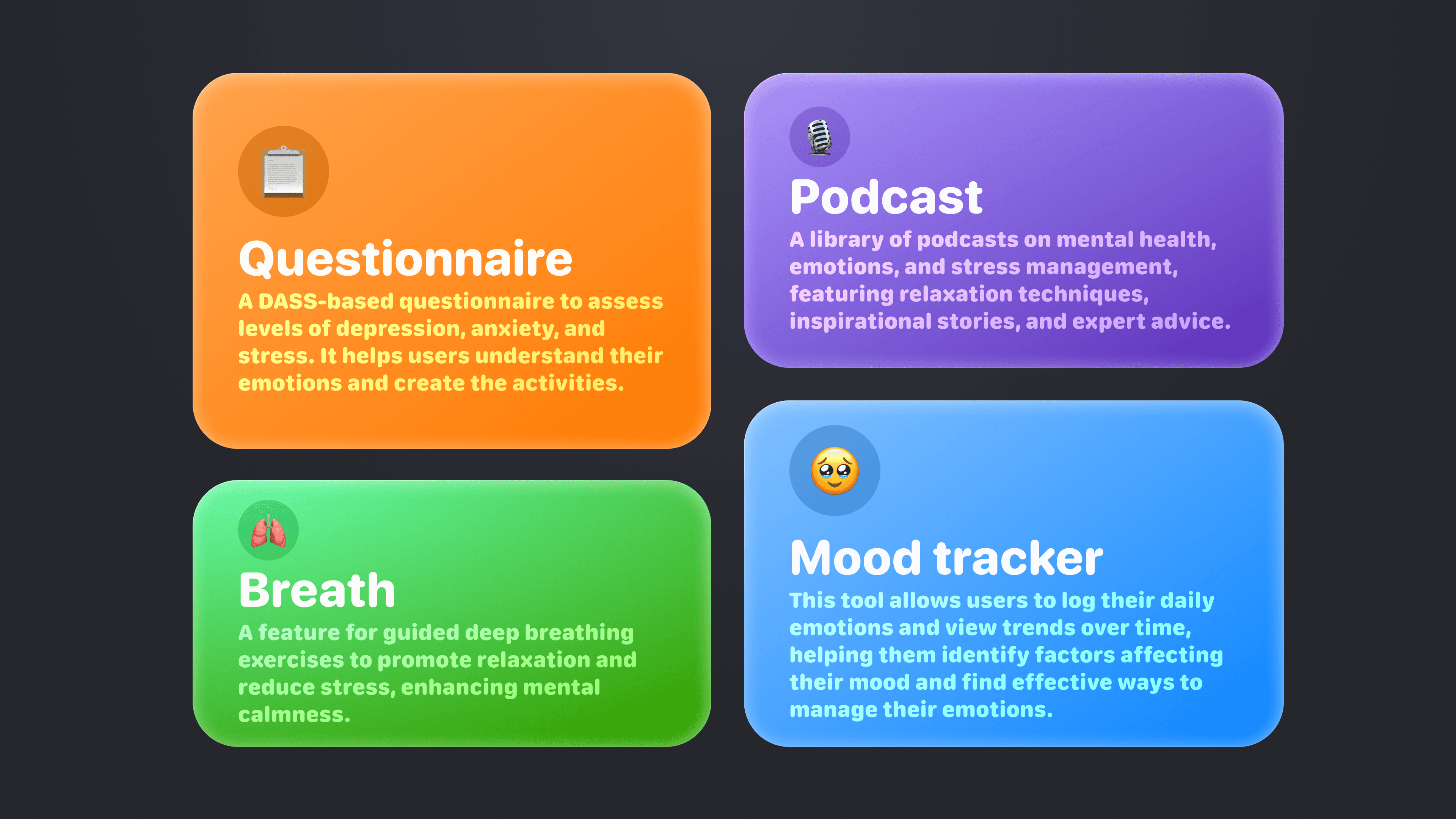
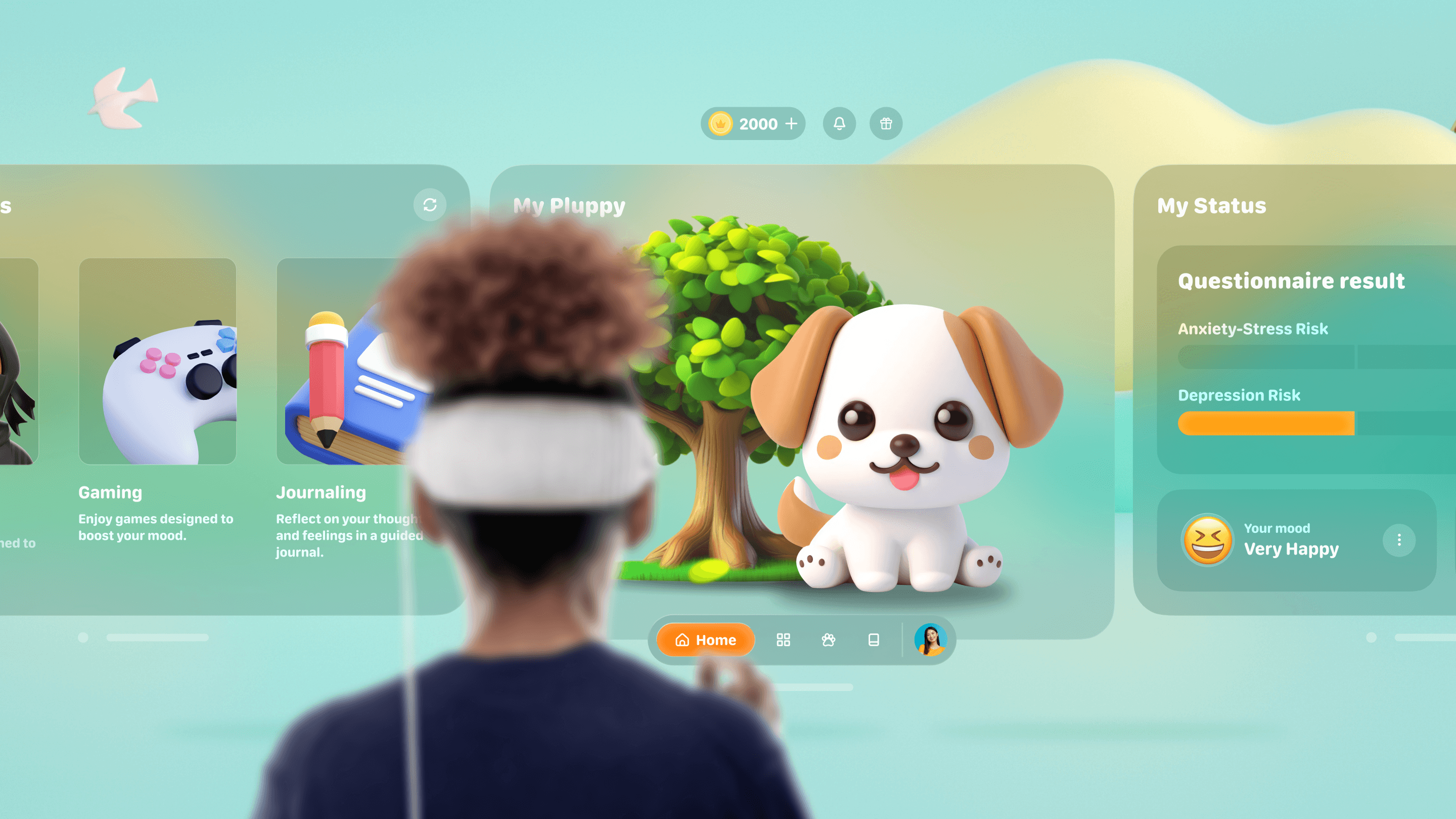
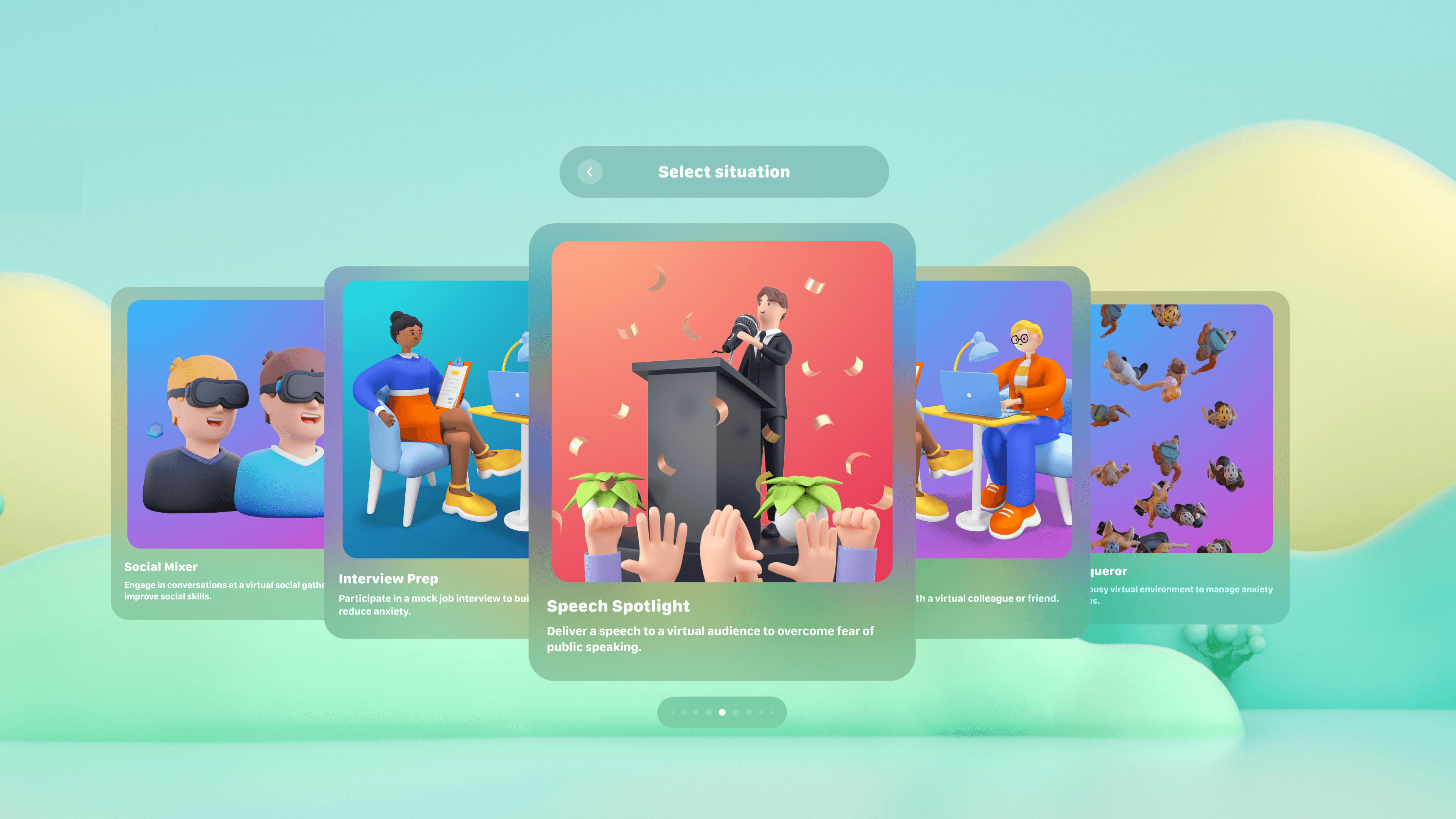
To bring this idea to life, I designed seven key features based on the Design Principles: Pet Simulator, Smart Recover, Smart Analysis, Questionnaire, Podcast, Breath, and Mood Tracker. These features work together as an emotional first-aid kit, helping users reflect, recover, and grow with ease.
Information Architecture
& Wireframe

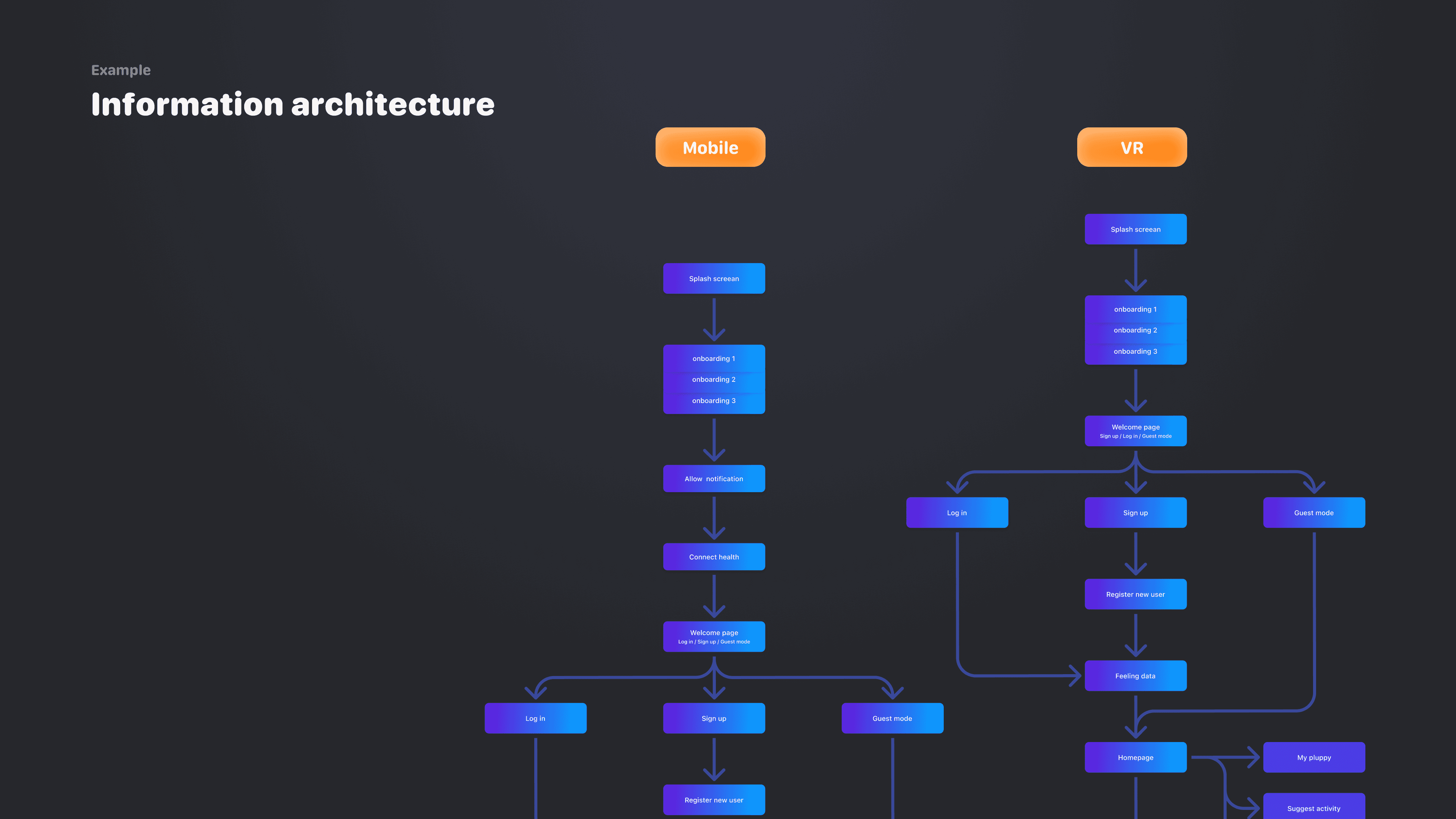
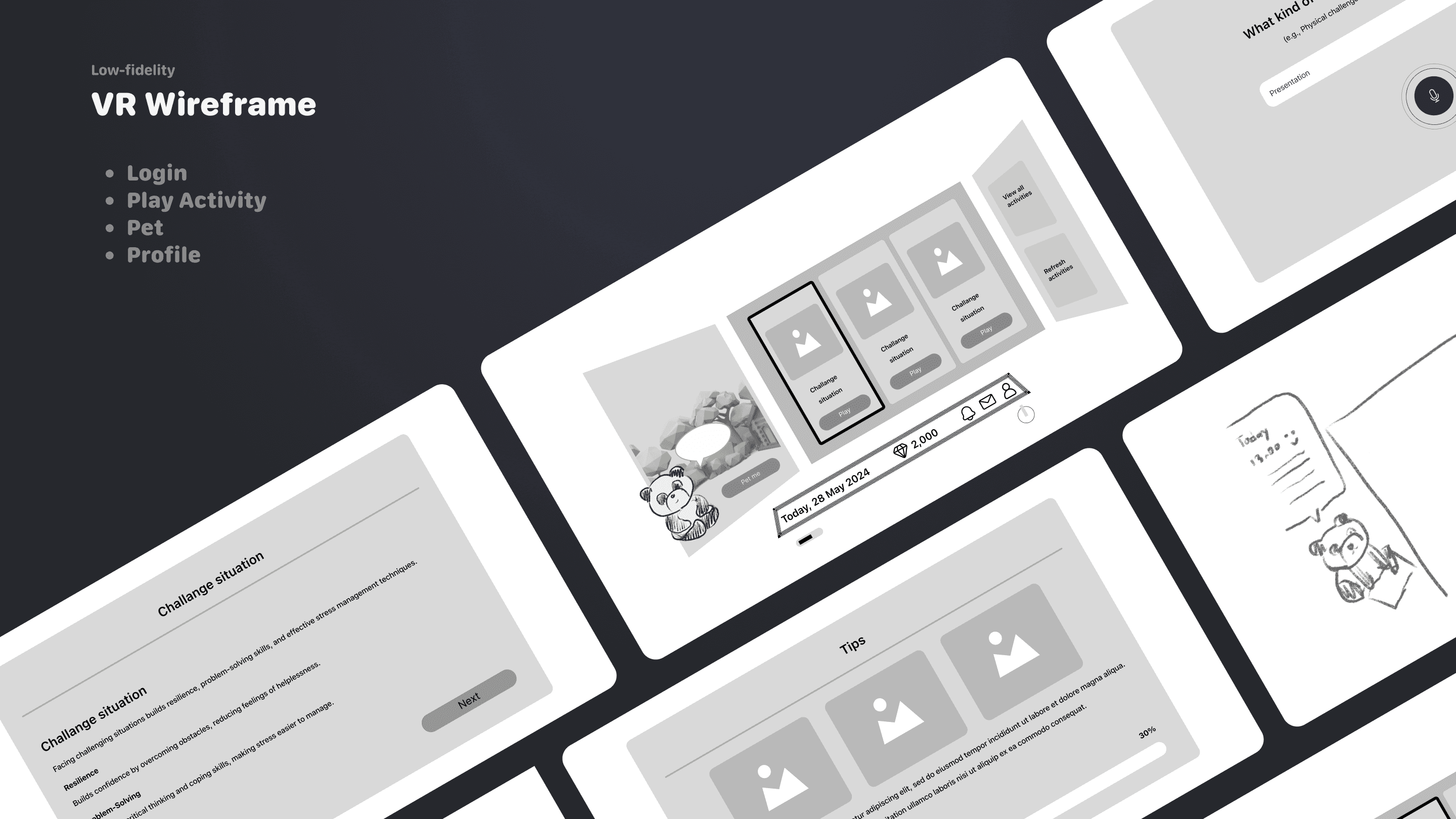
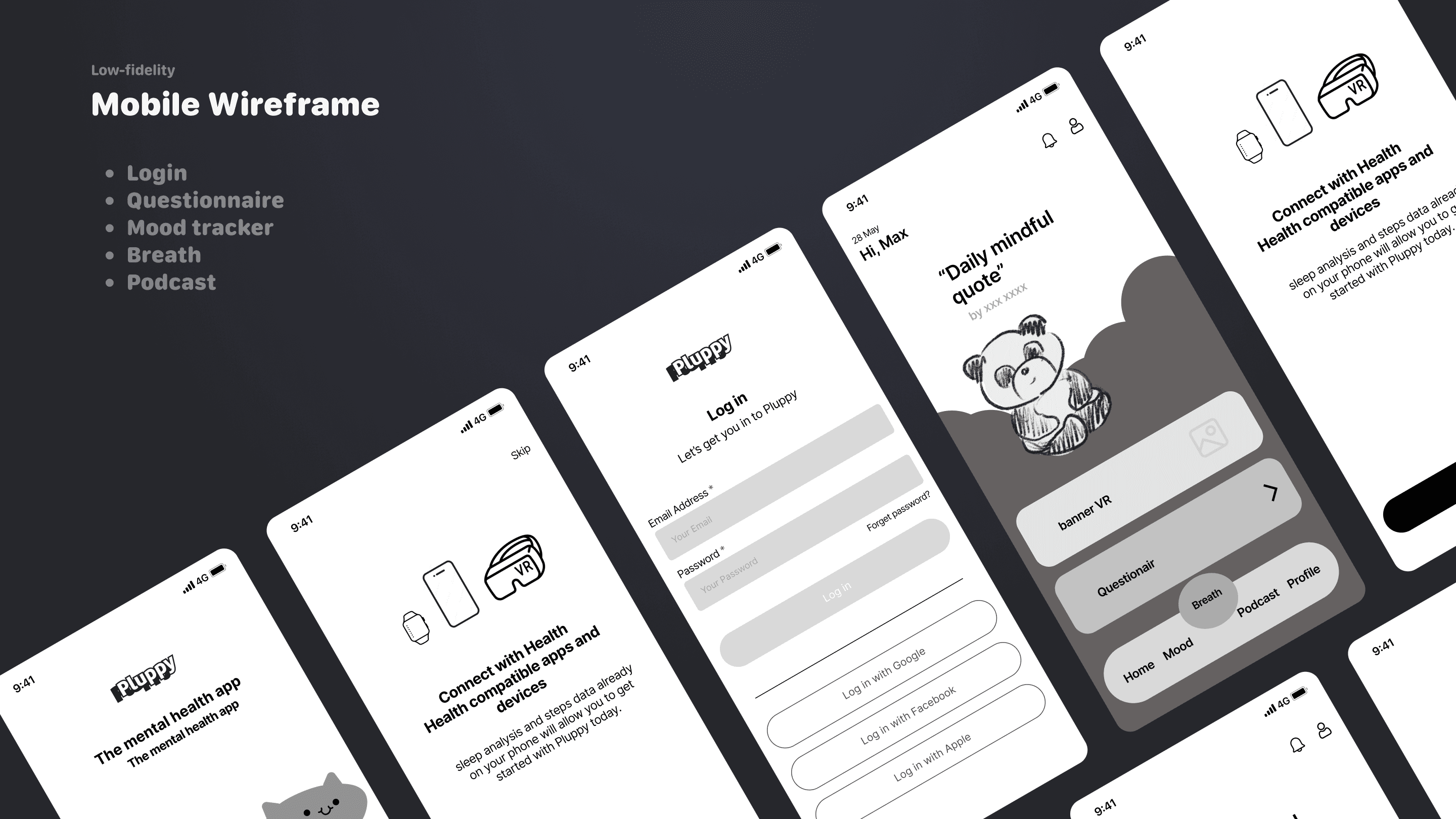
I designed separate Information Architectures for the mobile and VR platforms to match the unique interaction patterns of each device. The mobile version focuses on quick access and stability in daily life, while the VR version emphasizes immersion and emotional focus. Based on these IAs, I created low-fidelity wireframes for both platforms to visualize how users would navigate and interact with the features.

Design Direction

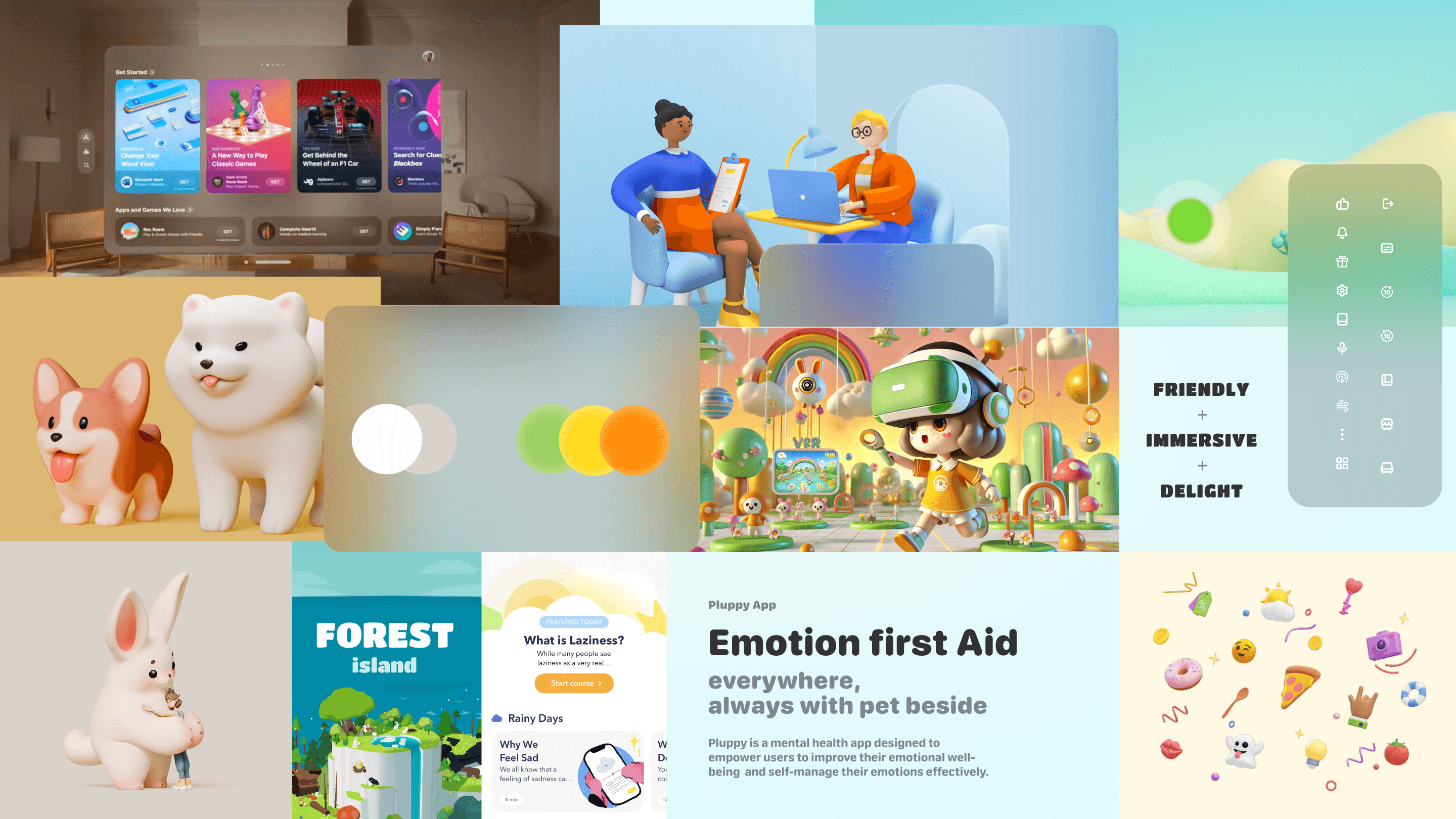
This direction was inspired by the idea of emotional comfort and support. Using a soft color palette, rounded 3D elements, and pet-like characters, the design aims to feel friendly, immersive, and delight, creating a safe space where users feel emotionally supported throughout their journey.

Outcome

Smooth Scroll
This will hide itself!
Pluppy A mental health app
OVERVIEW

A mental health app created to support emotional well-being through self-guided tools. The app aims to help users manage stress, anxiety, and depression more effectively with personalized methods that truly meet their needs.

Date

SEP 6, 2023
— NOV 29, 2023

ROLE

UX/UI DESIGNER

SERVICES

DIGITAL PLATFORM

About the project

This individual project began with a growing concern about mental health in Thailand, where emotional issues like depression and anxiety have been steadily rising. While many existing apps offer mood tracking or advice, they often lack depth and personalization. Pluppy was developed to fill this gap, using feedback from users and concept testing to create an experience that is both meaningful and engaging.

Persona

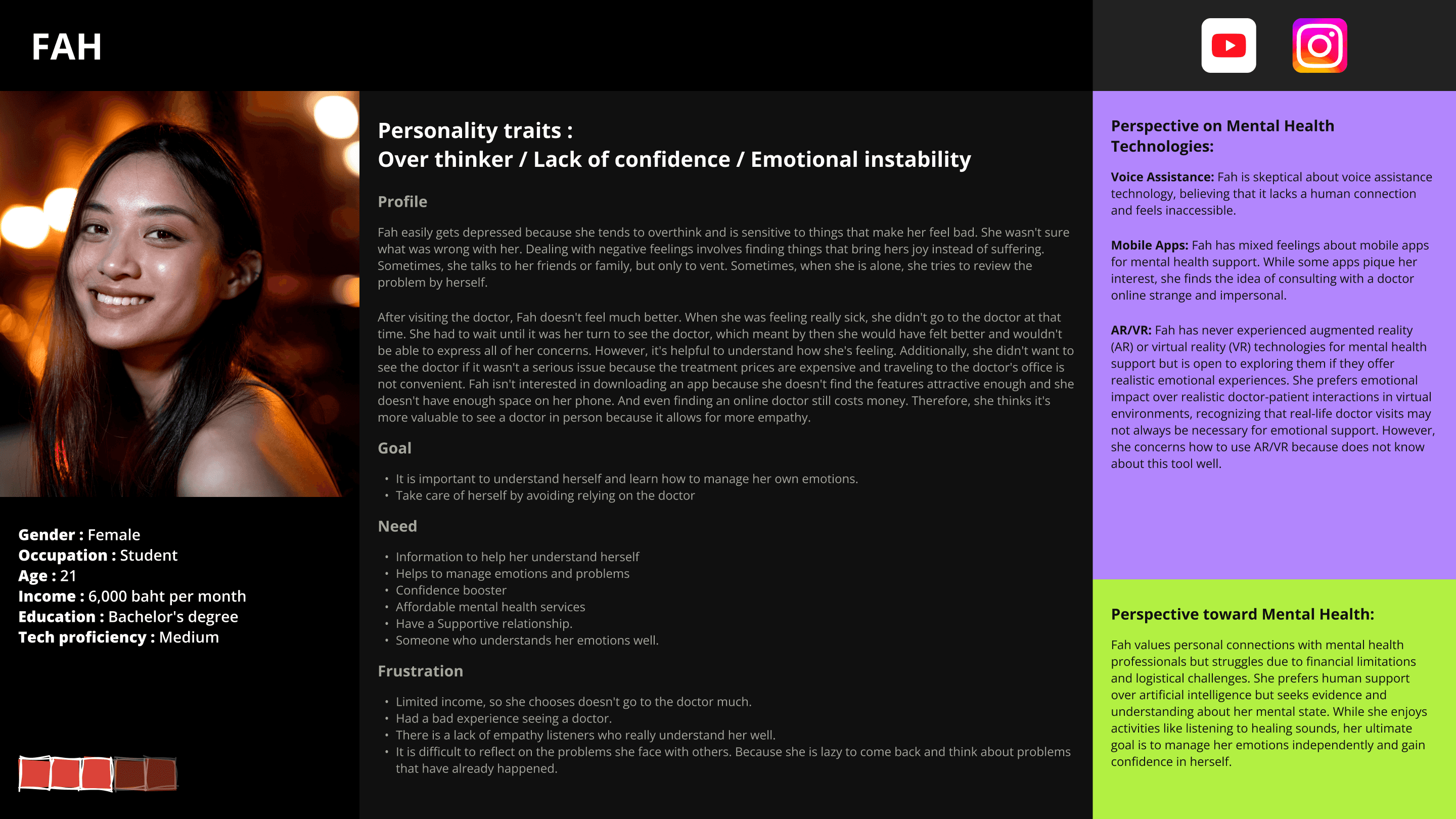
I focused on users with emotional struggles at levels 1–3, those who feel overwhelmed but don’t yet need clinical care. Through in-depth interviews, I shaped three key personas. Their differences helped me design with empathy, flexibility, and real user needs in mind.

Competitor Analysis

From studying existing mental health apps, I found that most offer mood tracking, podcasts, and supportive communities. However, many limit how often users can log emotions, lock key features behind subscriptions, or provide unhelpful advice in community spaces.

This led me to focus on creating a solution that helps users understand what truly works for them, and feel confident managing their emotions in a way that fits their personal needs.

Insight to Ideation

After defining the personas and their journeys, I grouped key pain points and goals into top findings. These led to focused How might we questions, which were sorted into five themes.

Each theme was labeled as either a Design Principle or Opportunity Area. Due to a limited timeline, I focused only on the Design Principles to guide some features that help users understand and manage emotions on their own.

Concept & Key Features

Based on the concept Emotion First Aid: everywhere, always with pet beside, I focused on creating a mental health tool that supports users in managing their emotions anytime, anywhere with a comforting virtual pet by their side. This idea centers on providing quick emotional support in daily life, allowing users to care for their mental well-being instantly wherever they are.

To bring this idea to life, I designed seven key features based on the Design Principles: Pet Simulator, Smart Recover, Smart Analysis, Questionnaire, Podcast, Breath, and Mood Tracker. These features work together as an emotional first-aid kit, helping users reflect, recover, and grow with ease.
Information Architecture
& Wireframe

I designed separate Information Architectures for the mobile and VR platforms to match the unique interaction patterns of each device. The mobile version focuses on quick access and stability in daily life, while the VR version emphasizes immersion and emotional focus. Based on these IAs, I created low-fidelity wireframes for both platforms to visualize how users would navigate and interact with the features.

Design Direction

This direction was inspired by the idea of emotional comfort and support. Using a soft color palette, rounded 3D elements, and pet-like characters, the design aims to feel friendly, immersive, and delight, creating a safe space where users feel emotionally supported throughout their journey.

Outcome

Smooth Scroll
This will hide itself!
Pluppy A mental health app
OVERVIEW

A mental health app created to support emotional well-being through self-guided tools. The app aims to help users manage stress, anxiety, and depression more effectively with personalized methods that truly meet their needs.

Date

JAN 1, 2024 — JUL 30, 2024

ROLE

UX/UI DESIGNER

SERVICES

DIGITAL PLATFORM

About the project

This individual project began with a growing concern about mental health in Thailand, where emotional issues like depression and anxiety have been steadily rising. While many existing apps offer mood tracking or advice, they often lack depth and personalization. Pluppy was developed to fill this gap, using feedback from users and concept testing to create an experience that is both meaningful and engaging.

Persona

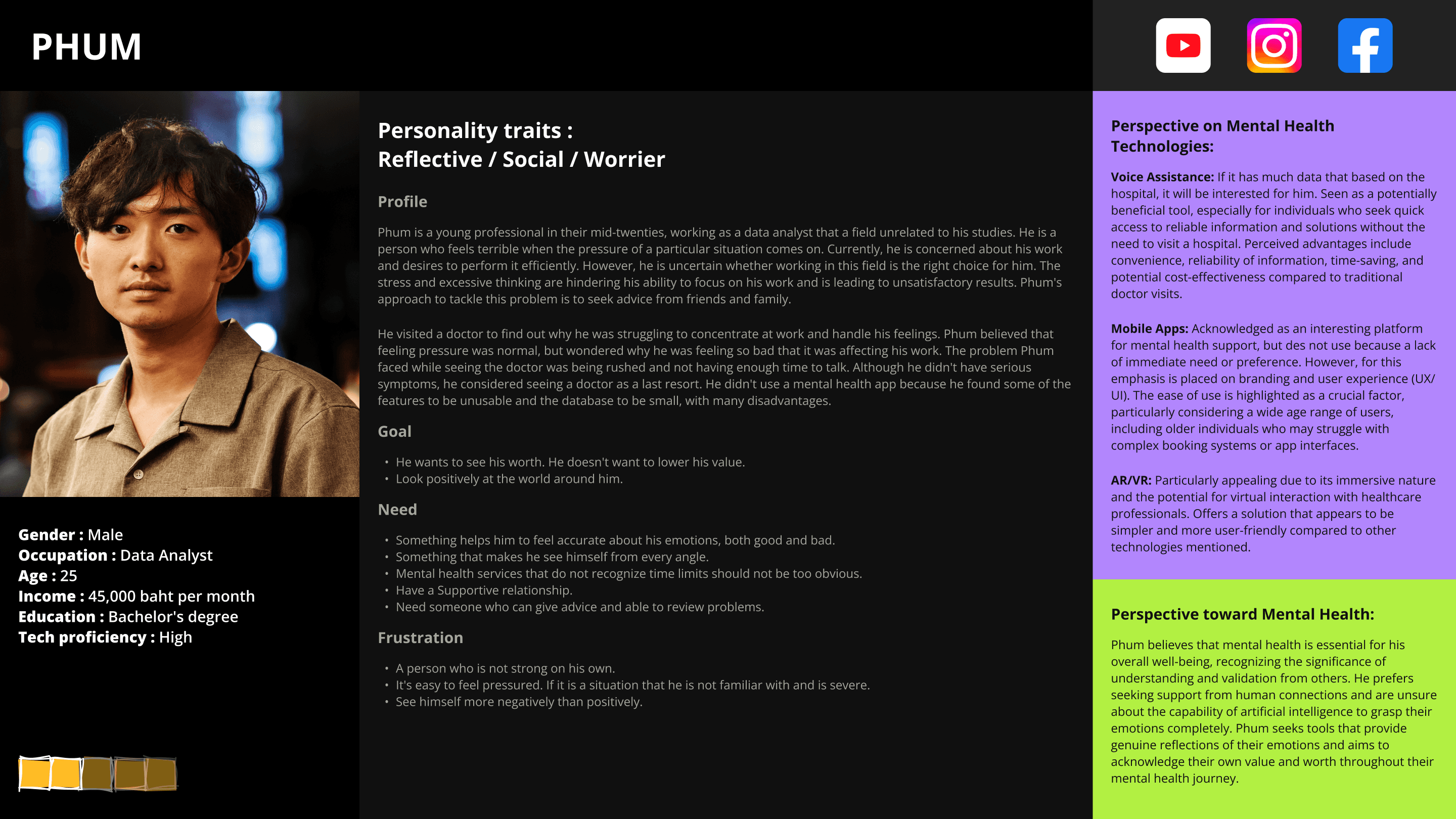
I focused on users with emotional struggles at levels 1–3, those who feel overwhelmed but don’t yet need clinical care. Through in-depth interviews, I shaped three key personas. Their differences helped me design with empathy, flexibility, and real user needs in mind.

Competitor Analysis

From studying existing mental health apps, I found that most offer mood tracking, podcasts, and supportive communities. However, many limit how often users can log emotions, lock key features behind subscriptions, or provide unhelpful advice in community spaces.

This led me to focus on creating a solution that helps users understand what truly works for them, and feel confident managing their emotions in a way that fits their personal needs.

Insight to Ideation

After defining the personas and their journeys, I grouped key pain points and goals into top findings. These led to focused How might we questions, which were sorted into five themes.

Each theme was labeled as either a Design Principle or Opportunity Area. Due to a limited timeline, I focused only on the Design Principles to guide some features that help users understand and manage emotions on their own.

Concept & Key Features

Based on the concept Emotion First Aid: everywhere, always with pet beside, I focused on creating a mental health tool that supports users in managing their emotions anytime, anywhere with a comforting virtual pet by their side. This idea centers on providing quick emotional support in daily life, allowing users to care for their mental well-being instantly wherever they are.

To bring this idea to life, I designed seven key features based on the Design Principles: Pet Simulator, Smart Recover, Smart Analysis, Questionnaire, Podcast, Breath, and Mood Tracker. These features work together as an emotional first-aid kit, helping users reflect, recover, and grow with ease.
Information Architecture
& Wireframe

I designed separate Information Architectures for the mobile and VR platforms to match the unique interaction patterns of each device. The mobile version focuses on quick access and stability in daily life, while the VR version emphasizes immersion and emotional focus. Based on these IAs, I created low-fidelity wireframes for both platforms to visualize how users would navigate and interact with the features.

Design Direction

This direction was inspired by the idea of emotional comfort and support. Using a soft color palette, rounded 3D elements, and pet-like characters, the design aims to feel friendly, immersive, and delight, creating a safe space where users feel emotionally supported throughout their journey.

Outcome

Smooth Scroll
This will hide itself!